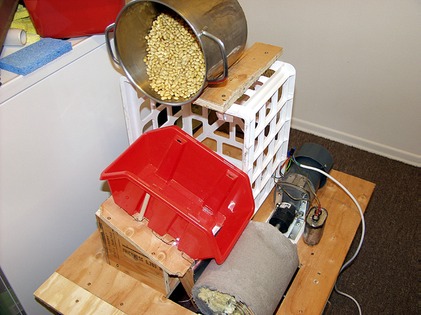
We heard from quite a few people that they cannot easily obtain already de-hulled soybean halves. We soaked organic whole beans for 24 hrs and then put them through our home made dehuller.
We covered a 1 gall tin can with a layer of cement to get a rough surface and made a channel with some aluminum for the beans to get squeezed on the way down when the wheel turns (counterclockwise). The distance at the top is about 2 beans, at the bottom half a bean.
This setup worked quite well. (the motor is 1/10th hp, 100 rpm used, $60)

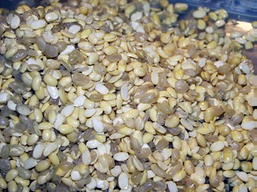
Getting rid of the hulls is a challenge. We tried several experimental set ups but are trying to keep it simple. A wire basket works the best. Dipping it into water several times and shaking it brings the hulls to the top. It was possible to shake the hulls to the left side and then dip the basket under the water a little bit and jerk it to the right. That removed most of them when done a few times. The remaining ones can be caught with a strainer when the beans are in the cooking pot . The hulls come up to the surface just before the water begins to boil..
Another method is to use them with the skins which amounts to more fiber in your tempeh.
Pre soak them for at least 6 hrs in room temperature water or for 4 hrs starting with boiling water (then turn off the heat). Cook them for 60 min.. Drain them and dry and stir them in a big bowl for about 3 min. (We used a small hair dryer on full heat).
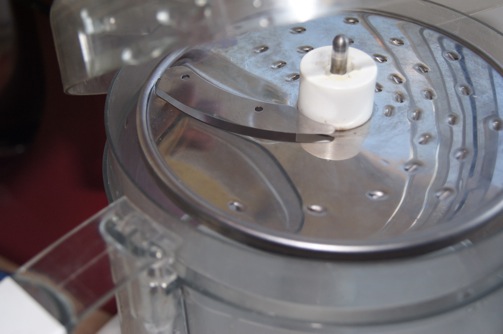
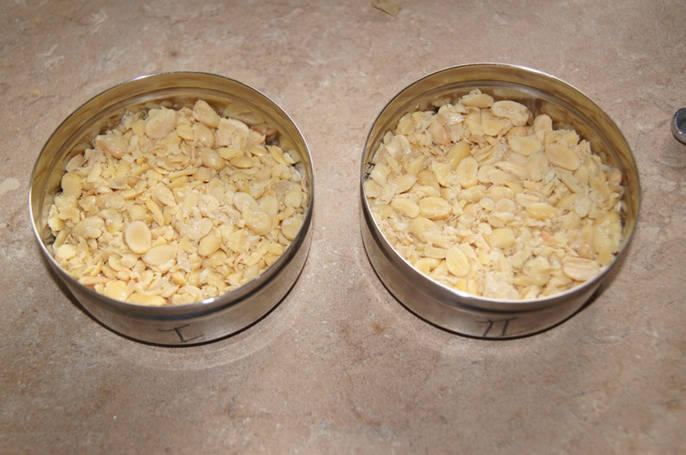
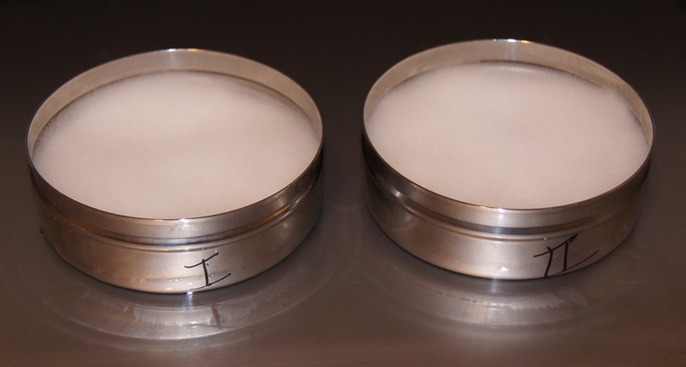
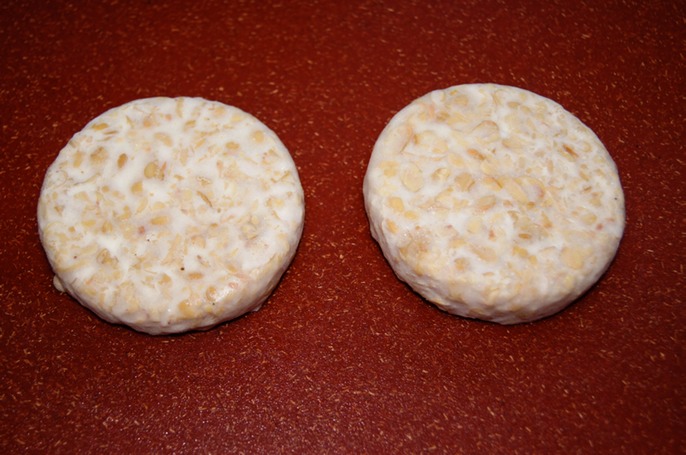
We chopped them with a (Kitchen Aid) 4mm horizontal slicer . For the can marked II we added a bit of rice flour to perhaps help diminish the moisture still held by the skins - and this looked just a bit better -maybe.